LulzBot TAZ 6 Reviews: See Why 0 Shoppers Rated It 0 Stars!
Everyone’s got opinions. We collected 0 of them to see if the LulzBot TAZ 6 3d printer really earns that 0/5 rating.
 Supermod
 Moderator
 Recaptor
LulzBot TAZ 6: A Professional-Grade 3D Printer Tailored for Precision and Versatility
When it comes to 3D printers that serve professional, educational, and advanced users alike, few models make a lasting impression like the LulzBot TAZ 6. Launched in 2016, this FDM/FFF printer has carved a niche by balancing reliability with extensive material compatibility. Built for prototyping, engineering, and miniature modeling, the TAZ 6 stands out for both its professional-grade build and user-focused design. But does it really live up to its specs in today's competitive landscape? Let's dive deeper into what this machine offers.
Detailed Specs & Features
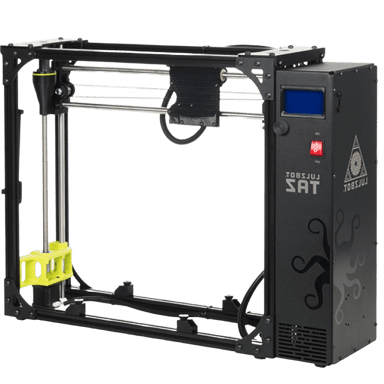
On paper, the LulzBot TAZ 6 boasts a substantial build volume of 1185 cubic inches, translating to generous printing dimensions of roughly 11 by 11 by 9.8 inches in width, depth, and height, respectively. This sizeable space means larger and more intricate projects are within reach. Its sturdy Cartesian frame, coupled with an open enclosure, keeps access easy but may impact environmental control. The printer utilizes a direct drive extruder, which facilitates the handling of flexible and composite filaments, increasing its versatility.
Its single extruder can be upgraded to support dual extrusion, albeit without independent motion. Temperature-wise, this device supports a maximum extruder temperature of 572°F, allowing it to handle demanding filaments such as Nylon and Carbon Fiber with ease. The heated bed reaches up to 248°F, improving adhesion and reducing warping. From an interface perspective, the TAZ 6 features a modest yet functional 3.5-inch screen that, while not touchscreen, provides a clear 128x64 pixel resolution, sufficient for navigation and status tracking. Connectivity includes USB and SD card options, ensuring compatibility with standard slicing software like Cura and Simplify3D, according to specs.
Notable is the printer's lack of remote monitoring and cloud features, focusing instead on direct, hands-on control. Environmental tolerance ranges between 60-80°F for operation and 32-95°F in storage, alongside 10-90% humidity tolerance. This robustness supports a wider variety of workshop conditions, which is reassuring given its open-frame design and lack of enclosure. Overall, the LulzBot's combination of build volume, material compatibility, and temperature control creates a solid foundation for professional 3D printing needs.
User Experience & Performance (Based on Specs)
Design & Build
In daily use, the LulzBot TAZ 6 impresses with a compact footprint of about 26 by 20.5 by 20.5 inches and a manageable weight of 33 pounds, making it fairly portable for a desktop professional printer. The prebuilt assembly means users can start printing without delay, a serious plus for those prioritizing setup time. However, it lacks any enclosure or environmental isolation, so printing very temperature-sensitive filaments may require additional setup or a mod kit. The printer's frame and build plate, made of glass with a smooth surface and removable design, further streamline print removal and maintenance. It supports automatic bed leveling, avoiding the tedious manual calibration process, thereby enhancing precision and ease. The open design aids visual monitoring but means that environmental controls rely heavily on workshop conditions.
Performance
Printing speed can reach an official maximum of 200 mm/s, but typically settles around an effective 60 mm/s, delivering a solid balance between detail and throughput. The layer resolution range from 50 to 500 microns allows users to adjust for fine detail or faster prints according to project needs. On the flip side, a lack of spaghetti/fault detection technology means prints rely on users' vigilance. The single direct drive extruder supports a wide array of filament types, including PLA, ABS, PETG, Nylon, TPU, Carbon Fiber, and even biocompatible materials, per the supported-filament-types list. This versatility is a great asset for professionals exploring different materials without switching machines.
Furthermore, the printer allows continuous printing sessions of up to 72 hours, which is quite impressive and aligns with its robust engineering and cooling system. Noise levels hover around 50 dB during operation, which is moderate and manageable in most workspaces. Noteworthy features like power-loss recovery and print recovery bolster reliability, ensuring that unexpected interruptions do not necessarily ruin print jobs.
Camera / Display / Audio Quality
Although the TAZ 6 doesn't have a built-in camera or touchscreen interface, its straightforward 3.5-inch LCD screen remains responsive. This screen with basic navigation and a resolution of 128x64 pixels is designed for efficiency rather than flashy interaction. While some competitors may offer richer interfaces, the simplicity here reduces points of failure and streamlines firmware updates, which remain user-friendly thanks to supported firmware updates.
Extra Features
This model lacks some modern convenience features like filament runout sensors and energy-saving modes, but makes up for this with key professional attributes. The modular toolhead, while not quick-swap, supports multi-material printing and easy hotend replacement, which is invaluable for upkeep and versatility. Safety is addressed by FCC certification, overheat protection, and several sensors to monitor operational safety, lending confidence for longer print cycles.
Pros & Cons
Pros
- Generous Build Volume Suitable for Large Prototypes
- Wide Material Compatibility Including Biocompatible Options
- Reliable Features like Auto Bed Leveling and Power Loss Recovery
- Prebuilt Design Minimizes Setup Time
- Supports Upgrade Path with Multi-Material and Enclosure Mods
Cons
- No Enclosure Limits Print Environment Control
- Lacks Modern Features Like Filament Runout Sensor and Remote Monitoring
- No Touchscreen Interface or Built-In Camera For Remote Inspection
- Energy Efficiency Lacks Power-Saving Mode
Price & Value for Money
At approximately $2500 at MatterHackers.com, the LulzBot TAZ 6 positions itself firmly in the professional-grade 3D printer bracket. Given its 1-year warranty period and robust power setup (100-240 Volt, internal power supply), the pricing feels justified for businesses needing reliability over flashy extras. Its flexibility across a broad spectrum of filament types further enhances its appeal to engineers and designers who value material experimentation. If you prioritize extended remote capabilities or ultra-modern sensor arrays, you might find the TAZ 6's feature set somewhat humble. However, for those focused on strong mechanical foundations and broad filament compatibility, this printer delivers solid value and predictable operation.
Quick Take
In short, the LulzBot TAZ 6 offers an impressive build volume and material versatility that outshines many desktop competitors. If we look at the numbers alone, it supports a demanding professional workflow without complicated software locks or gimmicks, making it a dependable choice in its segment.
Closing Recommendation
The TAZ 6 may be ideal for users seeking an out-of-the-box, reliable printer with a straightforward interface and rich filament options, especially those in education or prototyping environments. While it lacks certain modern conveniences, its proven engineering and upgrade paths help users achieve robust, high-quality prints with confidence and relative ease.
Verdict
Rating: Based on the specifications and overall feature set, we believe LulzBot TAZ 6 deserves 4.3 out of 5.
- Winner Feature => Wide material compatibility and large build volume for professional use.
- Needs Improvement => Limited modern features like enclosure, remote monitoring, and filament sensors.
Reviews 0
The good, the bad, and the brutally honest.Average Rating


More 3D Printers 453
Unlock more awesome finds.